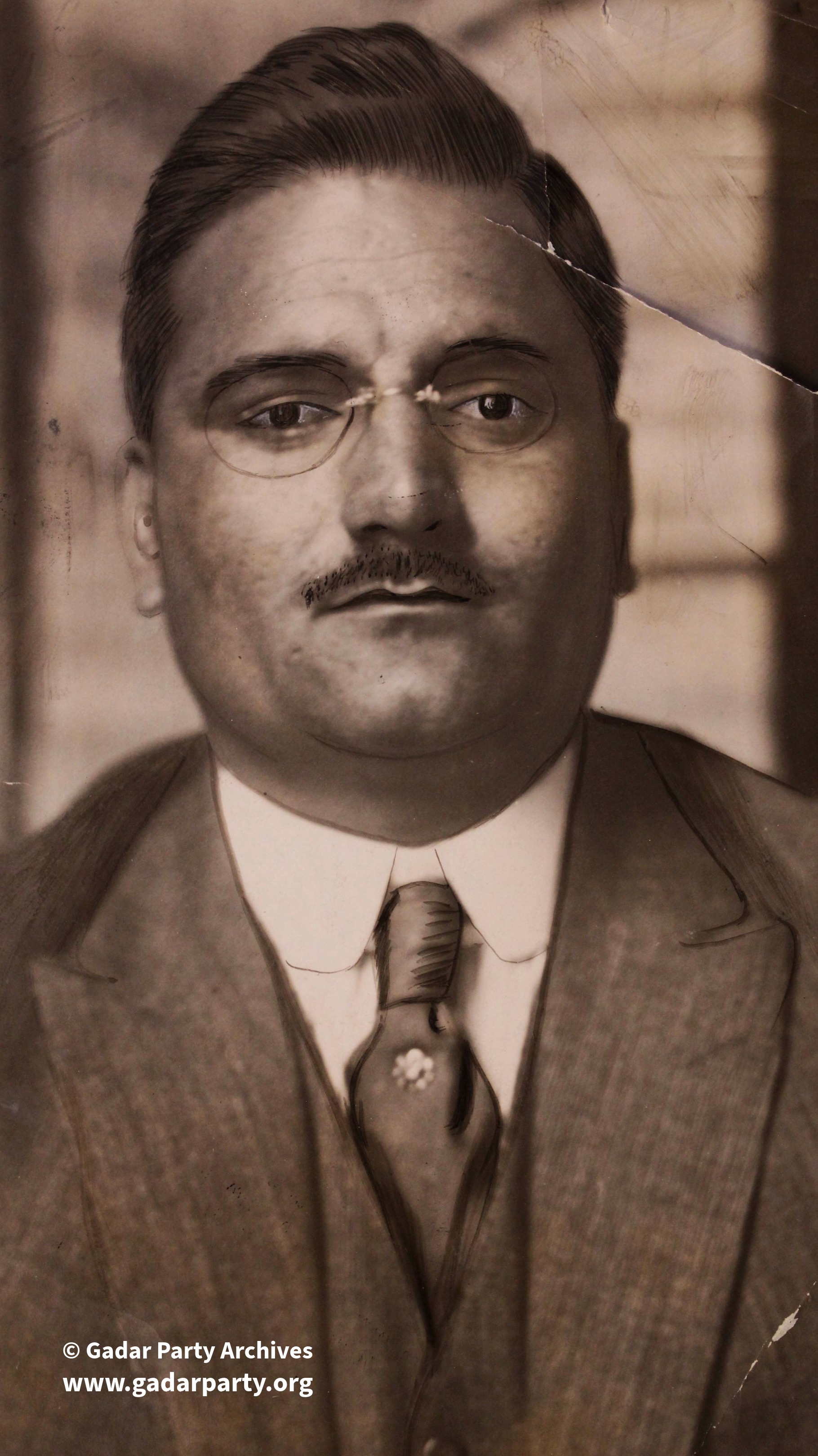
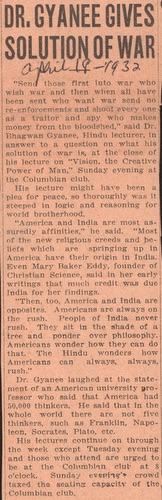
Bhagwan Singh graduated from Khalsa College in the Punjab in 1905, and after teaching two years became active in the independence movement. In 1909 he was sent to work in the Malay States, and from 1910 to 1913, he was in Hongkong where, as a cover for his revolutionary activity, he served as the priest - or granthi - of the Sikh temple. In 1913 he came to Canada, intending to organize revolutionary work among the Sikhs, but was arrested and ordered deported to India. En route, he escaped while in Japan, and in 1914 came to the United States. After working for a few months in the Ghadar Party in San Francisco, he was among those who left for Asia to take part in the hoped-for Indian revolution, spending most of his time until his return to San Francisco in 1916 in Japan and the Philippines. In the early 1920s he left the Party to go into farming, and in 1928, he left farming for the lecture platform, speaking primarily on topics of religion, philosophy and self-improvement. It was at this time that he assumed or was given the honorific title "Gyanee" (or "Gyani") meaning "the learned one" a name by which he was known thereafter.
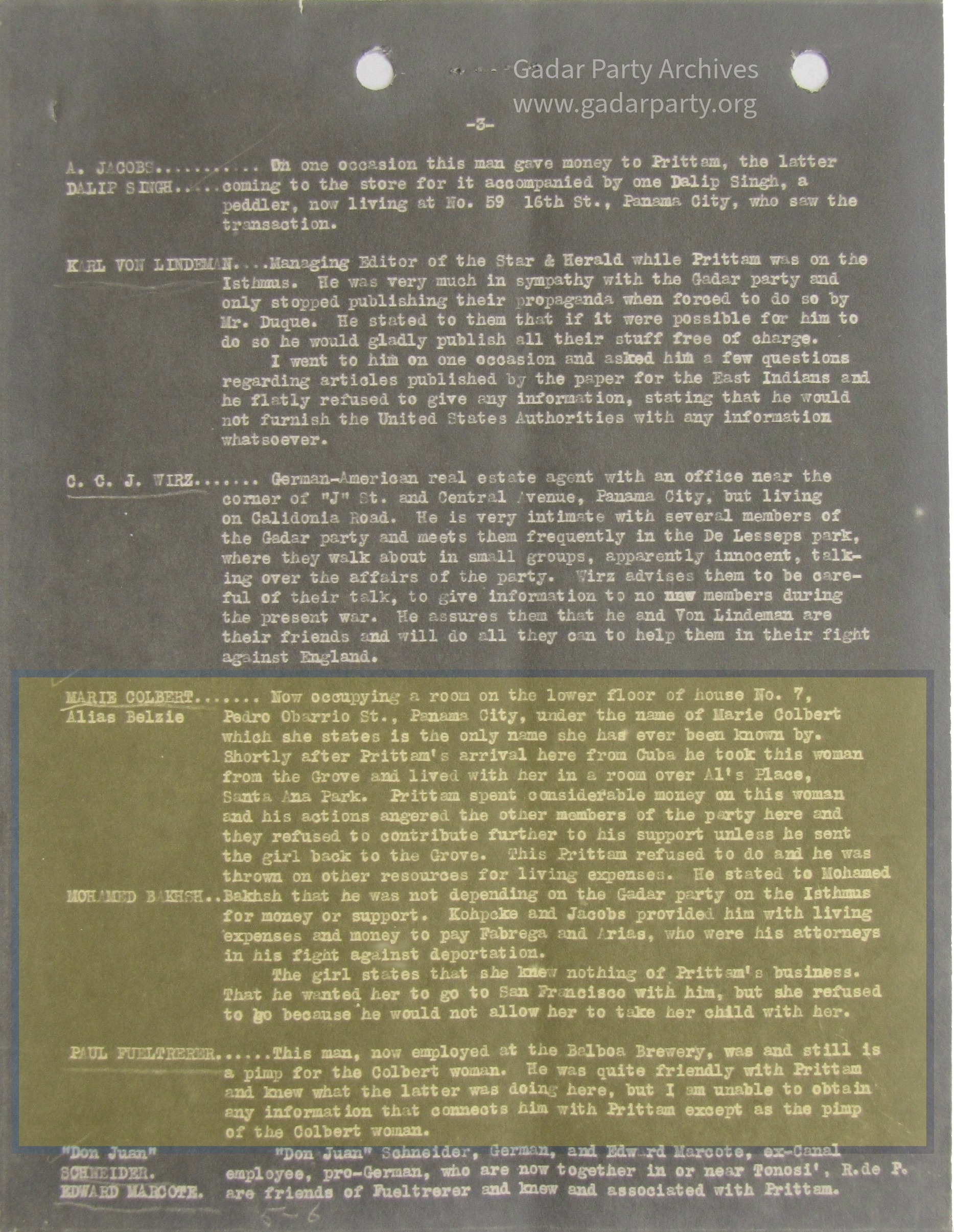
Despite his years of service in the cause of independence and the honored position to which he presumably was entitled by reason of his age and new name, Bhagwan Singh Gyance was not highly respected by his fellow East Indians. A Hindu fellow-revolutionary who had traveled with him in Asia described him as "a disagreeable companion." A Sikh member of the Ghadar Party spoke of him as a person who "liked good food, good living, and a woman in bed with him." A Muslim farmer referred to him as a "Hindu Al Capone" because of his rough money raising tactics on behalf of the Ghadar Party. A forgiving friend described him as "a loveable character who had trouble with women and expensive tastes."
In 1958 he returned to India, where he organized a "Self Culture Institute" at Chali, in the hill country above Chandigarh.